
Institutional preservation occurs when an organization prioritizes protecting its wealth, reputation, and leadership over the safety, healing, and rights of victims. This behavior directly contradicts trauma-informed healing by weaponizing administrative power, which often replicates the original abuse dynamic. Below are key historical and modern practices used by institutions, including religious organizations, schools, sports bodies, and government agencies, that actively undermine trauma-informed care and restitution.
Table one: Legal and Financial Deflection
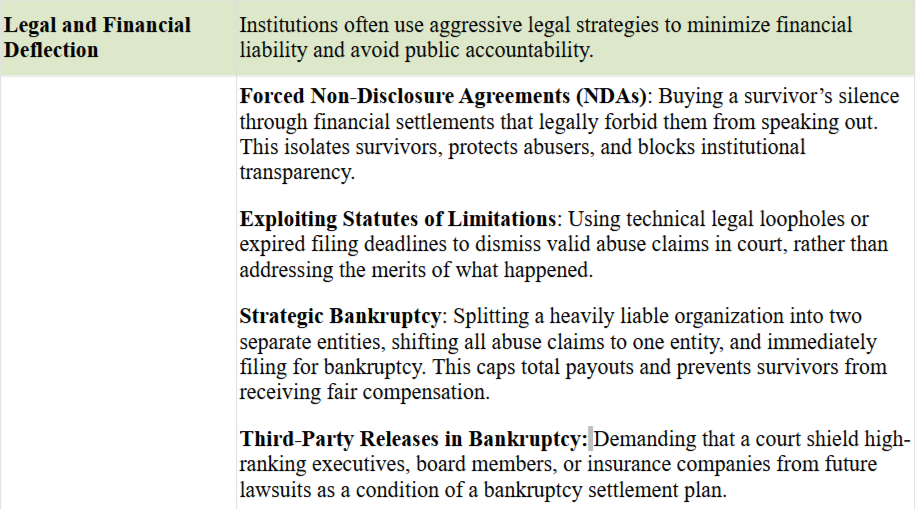
Table two: Performative or Counterproductive Restitution
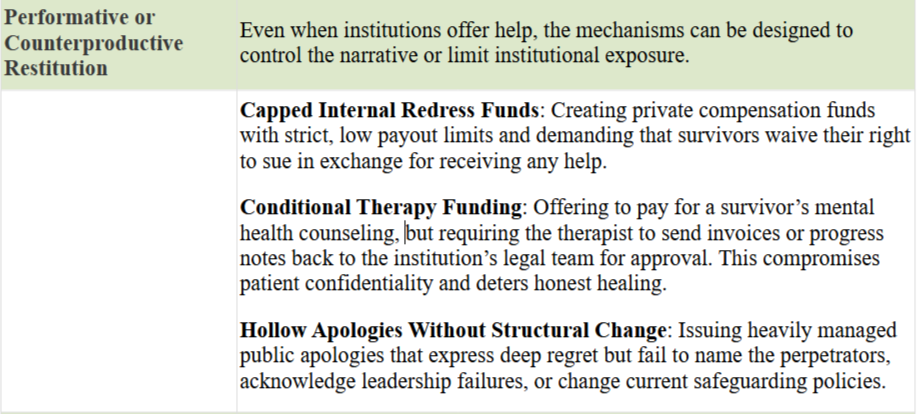
Table three: Psychological and Social Gaslighting
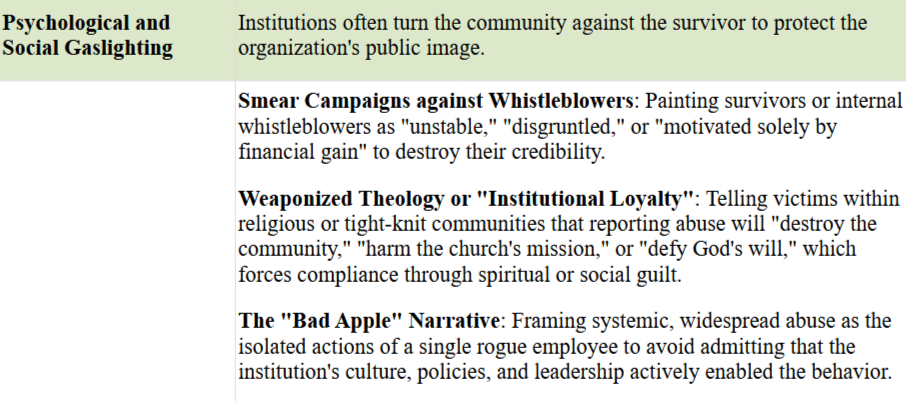
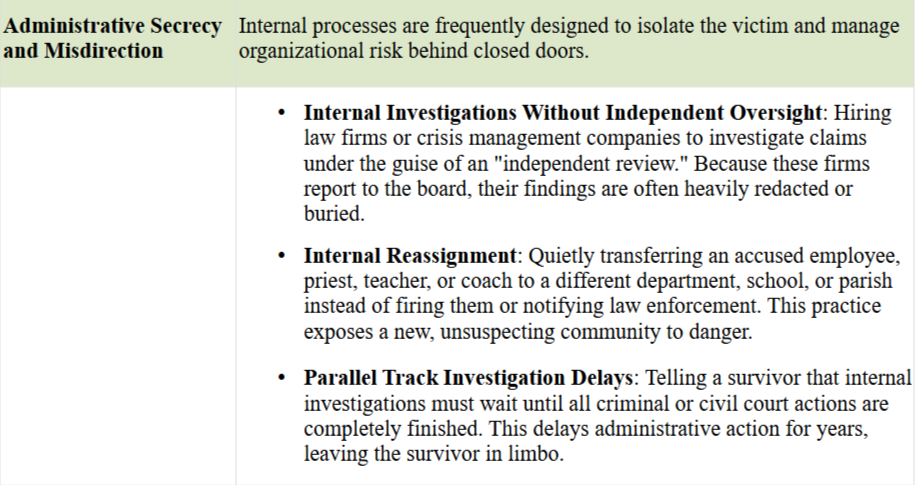
Table four: Administrative Secrecy and Misdirection
Religious institutions are progressively moving away from defensive, insular postures toward systemic accountability and transparency, though progress varies globally.
Canada's ongoing reconciliation efforts mark a significant, systemic transition away from historic institutional preservation policies toward models of transparent, survivor-centered accountability. For generations, state and religious institutions used legal shields, enforced silence, and bureaucratic denial to protect their reputations and wealth when dealing with the horrors of the Indian Residential School system and other state-sponsored harms.